Nobody puts the bare PCB on their supply chain risk list. It's the cheapest line on the PCBA BOM, it comes back from the fab in days, and it has never once been the reason a build slipped.
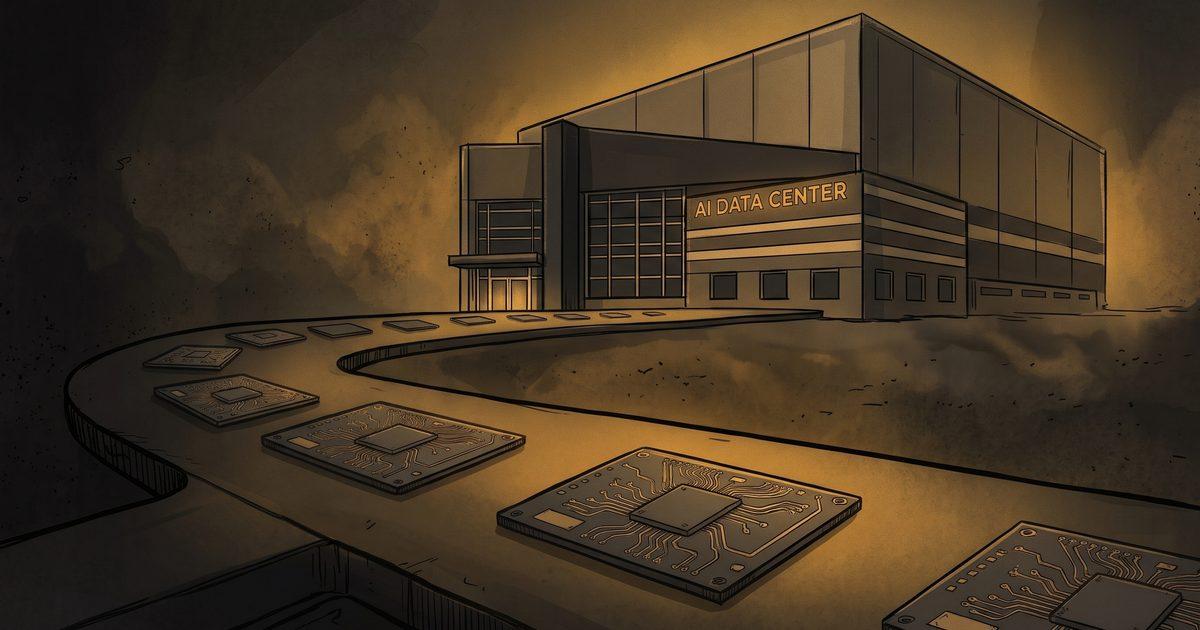
That assumption is getting tested. Through 2026, the copper-clad laminate that every circuit board is made from, and the woven glass cloth inside that laminate, have been on allocation. The cause is the same one behind most hardware supply news this year: AI data centers.
I'll be upfront about how far this goes. For a startup building on plain FR-4, this is mostly a story about prices and lead times creeping, not boards that can't be bought. It may stay that way. But it's moved one layer further down the supply chain than most hardware teams ever look, and it lands hardest on the teams with the least leverage.
The Line Item You Never Worried About
When I plan a build, the bare boards are an afterthought. They're cheap; a five-pack of two-layer prototypes has cost a few dollars plus shipping for years. Assembly is what's expensive, and getting every assembly part in stock at the same time is what you actually worry about.
Component shortages, at least, make sense when they happen. During the 2018 MLCC shortage, ordinary ceramic capacitors went on months-long lead times, and nobody who understood the market was surprised. A handful of companies, Murata, Samsung Electro-Mechanics, Yageo, TDK, make most of the world's MLCCs. When automotive and phone demand spiked together, there was nowhere else to go.
The board itself felt different. Fiberglass, epoxy, and copper sound like commodities. It turns out the supply chain under them is just as concentrated as the capacitor market; we just never had a reason to look.
What's Actually Short
A PCB laminate is woven glass cloth soaked in resin and clad in copper foil. Every layer of that stack is under pressure right now.
AI servers and switches use large, high-layer-count boards built on low-loss laminate and specialty glass. Nittobo, a Japanese company, is estimated to make about 90% of the world's T-glass, the low-expansion glass cloth that high-end substrates need, and according to Nikkei, NVIDIA, Microsoft, Google, and Amazon have booked most of its premium capacity. Nittobo plans to roughly triple capacity, but not until its fiscal year ending March 2029.
That would be someone else's problem if it stayed in the premium tier. It hasn't. Glass weavers have shifted lines toward the low-Dk yarns AI hardware needs, which squeezes standard E-glass, and laminate makers have followed demand up the price curve. Kingboard, one of the largest laminate suppliers in the world, issued at least eight price increases on laminate and prepreg between March and October 2026, according to a tally by NextPCB of notices reported by DIGITIMES and others. Korea's import price for copper-clad laminate in March was up 74.5% year over year. In China, spot prices for standard FR-4 sheet nearly doubled in a year.
Lead times moved with it. Doug Dixon, CEO of the fabricator 360 Circuits, wrote in September that advanced laminate lead times had approached 140 days, that some standard FR-4 had gone from a few days to several weeks, and that some 8 to 12 week lead times had stretched to 20 to 30. Relief is expected in 2027, with the usual caveat that capacity schedules slip.
Allocation Has a Pecking Order
When a material is on allocation, the supplier decides who gets it. Dixon put it plainly: initial output gets claimed quickly by large strategic customers. Some suppliers are now capping how much any one customer can order, regardless of price.
A company shipping a million units a year signs a supply agreement, forecasts a year out, and gets a call when allocation tightens. A startup ordering 20 boards from a quick-turn shop gets whatever laminate is on the shelf that week, at whatever that week's price is. The quick-turn shops are exposed too; their whole model assumes a broad material inventory sitting on the floor.
This is why a shortage like this hurts startups first. Big companies can secure their supply chains. You mostly can't, and the obvious workaround has its own problem.
The Pre-Buy Trap
The textbook answer to a supply shortage is to buy ahead. For a startup, that runs into two walls.
The first is cash. Every dollar of inventory is a dollar not spent on the next revision, and pre-seed runway doesn't stretch to stocking boards for a product that hasn't passed EVT.
The second is that your board is still changing. Pre-buying 200 copies of rev C is a bad trade if rev D lands in three weeks with a moved connector. The bare board is cheap; a stack of scrapped bare boards is still waste, and it's waste of exactly the cash you were trying to protect.
The way out is to stop treating "the board" as one decision. Most products have several boards, and they don't all churn at the same rate. The main board with the MCU and the radio changes every build. The power board, the connector breakout, and the LED board often freeze two revisions earlier. Those stable boards are where pre-buying makes sense: bare boards are cheap enough that a few hundred extra of a frozen revision, consigned to your CM, costs less than one lost week of schedule. Triage which boards deserve that buffer the same way you'd triage single-sourced components.
Give the Fab Room to Substitute
The cheapest protection is in your fab notes. If your drawing names a specific laminate product, you've single-sourced a material you never thought of as a part. When the fab doesn't have it, your order waits.
Unless the design needs a specific material, call out laminate by IPC-4101 slash sheet and minimum Tg, followed by "or equivalent," instead of a brand. Use the fab's standard stackup unless you need controlled impedance. A custom stackup pins you to particular glass styles and prepreg thicknesses, and the thin glass styles are exactly where some of the steepest 2026 price increases landed.
Then ask your fab what it actually has on the floor. A quick-turn shop that stocks one standard FR-4 product in quantity will build your board faster on that material than on the one you specified by habit. If your design can live with it, design to it.
Getting Creative With the First 100 Boards
Here is where I think startups are going to have to change how they work. If fab lead times stretch and quotes stop holding, the first 10 to 100 boards are where you have the most room to get creative, and the least to lose.
Some of that work can come back in-house. A desktop PCB mill, from vendors like LPKF or Bantam Tools, cuts two-layer boards from blank copper-clad sheet in an afternoon. The limits are real: no plated through-holes without rivets or wire, and fine-pitch QFNs and BGAs are a fight. But for sensor breakouts, test fixtures, interposers, and boards you need for a mechanical fit check, a milled board today beats a fabbed board in three weeks. Blank copper-clad sheet is cheap enough to keep a stack on the shelf.
Assembly can come in-house too, at prototype volume. A solder paste stencil, a reflow oven or hot plate, and a small pick-and-place machine (the open-source LumenPnP is one) will build a dozen boards for an EVT bring-up without waiting on a turnkey quote.
None of this replaces a real fab for a four-layer board with a radio on it. The point is to stop routing every prototype through the most constrained queue in the supply chain. Keep the fab capacity you can get for the boards that actually need it.
The Substitution Is a Change. Record It.
If your fab swaps laminate on you, that is a change to your product, even if the Gerbers didn't move. A different laminate can shift Tg, Dk, and how the board holds up through reflow. It usually won't matter. When it does, it shows up months later as a field failure on boards that look identical to the ones that passed qualification.
So treat it the way you'd treat a capacitor swap on the PCBA: the bare PCB has its own part number and revision, its fab notes are part of that record, and the laminate actually used on each lot gets written down. If a substitution changes the spec, it's a lightweight ECO, not a line in someone's inbox. In oroForge, the bare PCB is a part like any other, with its fab drawing attached to the revision and the reason for each change in its history, and there's a free plan to start on. A spreadsheet with a "notes" column will hold that too, until the person who wrote the notes leaves.
Plan for It Without Panicking
This might still turn out to be a mostly premium-tier problem with some price spillover. Standard FR-4 is tight but available, and relief is forecast for 2027. Nobody should be pre-buying a year of boards on the strength of a news cycle.
But it's something your team needs to plan for. Check what your fab notes actually specify. Know which of your boards have stopped changing. Build enough in-house capability that a three-week quote doesn't stall bring-up. The board was never the thing you worried about. That's exactly why it's worth a look now, while it's still cheap to fix.